
“Nature holds the key to our aesthetic, intellectual, cognitive and even spiritual satisfaction”
Edward O Wilson
Biophilia – a term coined by American biologist Edward O Wilson in the 1980’s if you want to get fancy – is the theory that humans hold an innate attraction to nature and natural elements.
When we incorporate that to the design world (which, if you are reading this, the likelihood is you enjoy doing as much as I do), it is called Biophilic Design. This design approach advocates looking to nature to improve our state of mind. But who can testify to this? Well, an entire sub-region can. Scandinavia. According to the 2019 World Happiness Report – published by the UN Sustainable Development Solutions Network – the three regions which make up Scandinavia (Sweden, Norway and Denmark, just in case you flunked Geography) are ranked number 7, 3 and 2 respectively. Which means they must be doing something right, no?
Nature lies at the very core of Scandinavian design, where they use their homes as a calm and restorative means to alleviate the stresses of everyday life. So to achieve seamless Biophilic Design in your home, researching how the Scandinavians do it is a good a place as any to start.
If you are feeling like you want your home to become a little more at one with nature, start with the five steps below.
1. Light
As a teenager, a waking before 11am was deemed ungodly to me. I would draw the curtains and hope the cheap black-out backing worked its magic. Nowadays my husband and I are at regular 6am fist-a-cuffs (the clean version) as I throw the curtains wide to let the natural light flow. This is an evolutionary charm; as I have evolved from moody teen into cheerful adult I have learnt to embrace nature, as I am sure alot of us have.
With Urban living and working on a rapid increase, the human population is becoming rapidly disconnected to the green stuff. So throw your curtains wide where you can, let any light and natural views be the catalyst in reenergising your mental and physical wellbeing.
2. Plants and Flowers
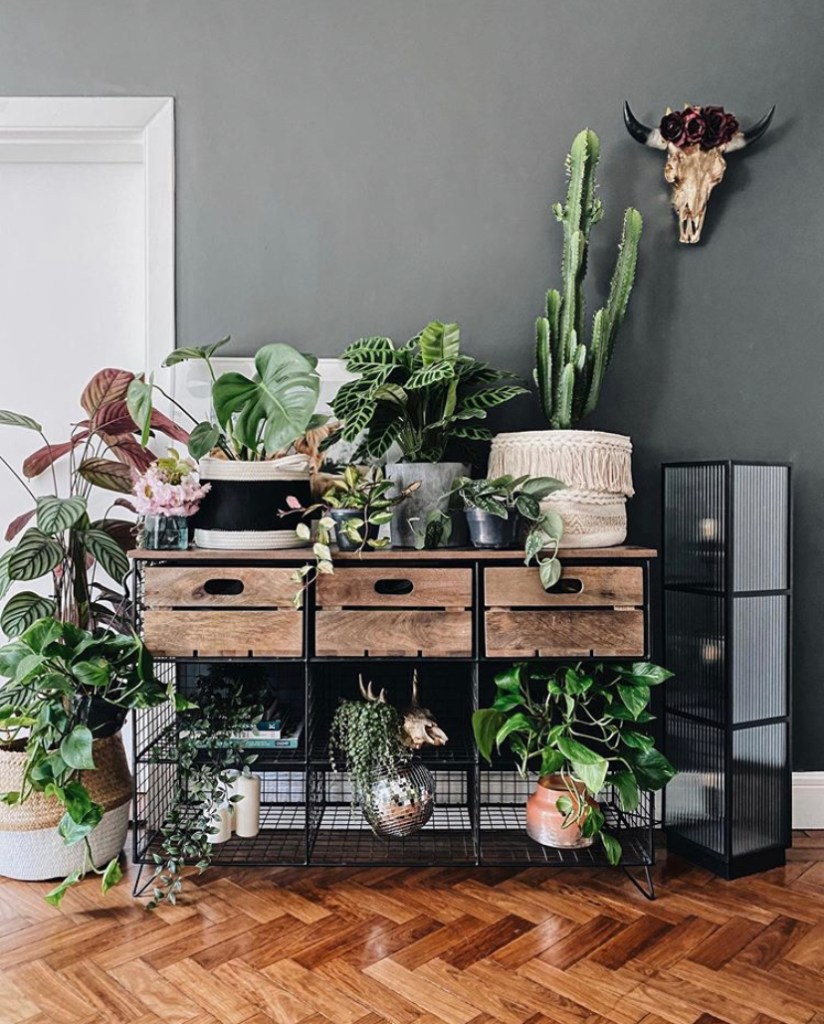
Did you know that, according to the RHS, research has shown plants to have a positive effect on mood, productivity and, most importantly, stress? That is a whole lot of good from the Monstera you only purchased because it was trending on Instagram. Foliage and flowers have also been shown to brighten even the foulest of tantrums. So to help bring the outside in and benefit your wellbeing, one of my top tips is to – well – literally bring the outside in.
3. Natural Materials
Scandinavians favour all natural materials in their home, and nothing quite says nature like a rustic wood table or soft sheepskin rug. To increase the happy in your home, consider using materials like linen, jute, wood, concrete and wool for your core pieces and accents.
4. Colours
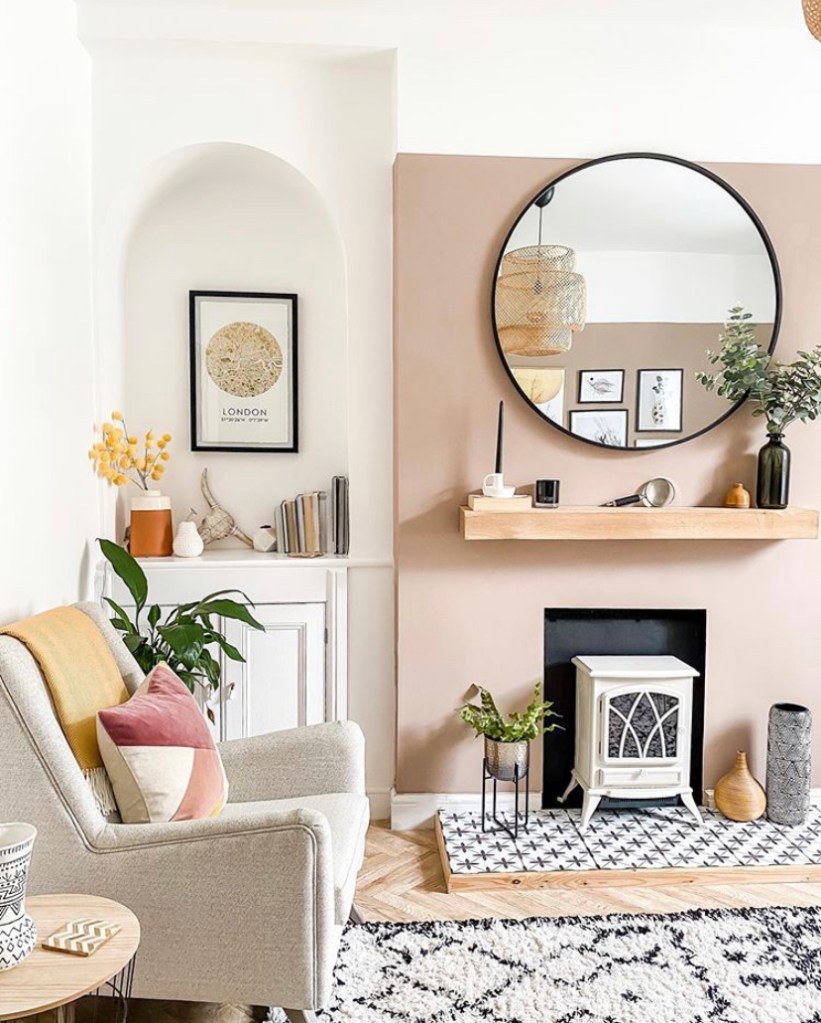
Dark, moody palettes are not typically synonomous to Scandinavian design – though that is not to say the colour scheme has never been done in Scandinavia. If you are looking to follow in their Top-10-Happiest-Countries-In-The-World footsteps (and who wouldn’t?) then try opting for the more traditional muted and earthy tones to give you that indirect respresentation of nature. Think white, tan, mustard and grey.
5. Art and Accessories
If you can’t get your hands on the real green stuff, there is no harm in faking it. Whilst the air quality may not improve with faux foliage (though the jury is out on the validity of this fact anyway) your mind will still make the right connections. Go one step further and incorporate some botanically themed art prints and accessories. Homeplistic has a great range of nature-themed products, like these leaf-shaped platters, to help you on your way.

There you have it. 5 easy steps to Scandify (can I copyright that?) your home and improve your mental wellbeing.
Bye for now,
Kelly x
I am a brand ambassador for Homeplistic. I only work with brands that I know and trust.

 fiveandafarmhouse.co.uk
Leave a comment